Dr. Elin Voss comes to Lake Iliamna to measure salmon, study seal feeding zones, and test a sonar array. When three instruments agree on an unexplained return, she sets out to prove her own result wrong.
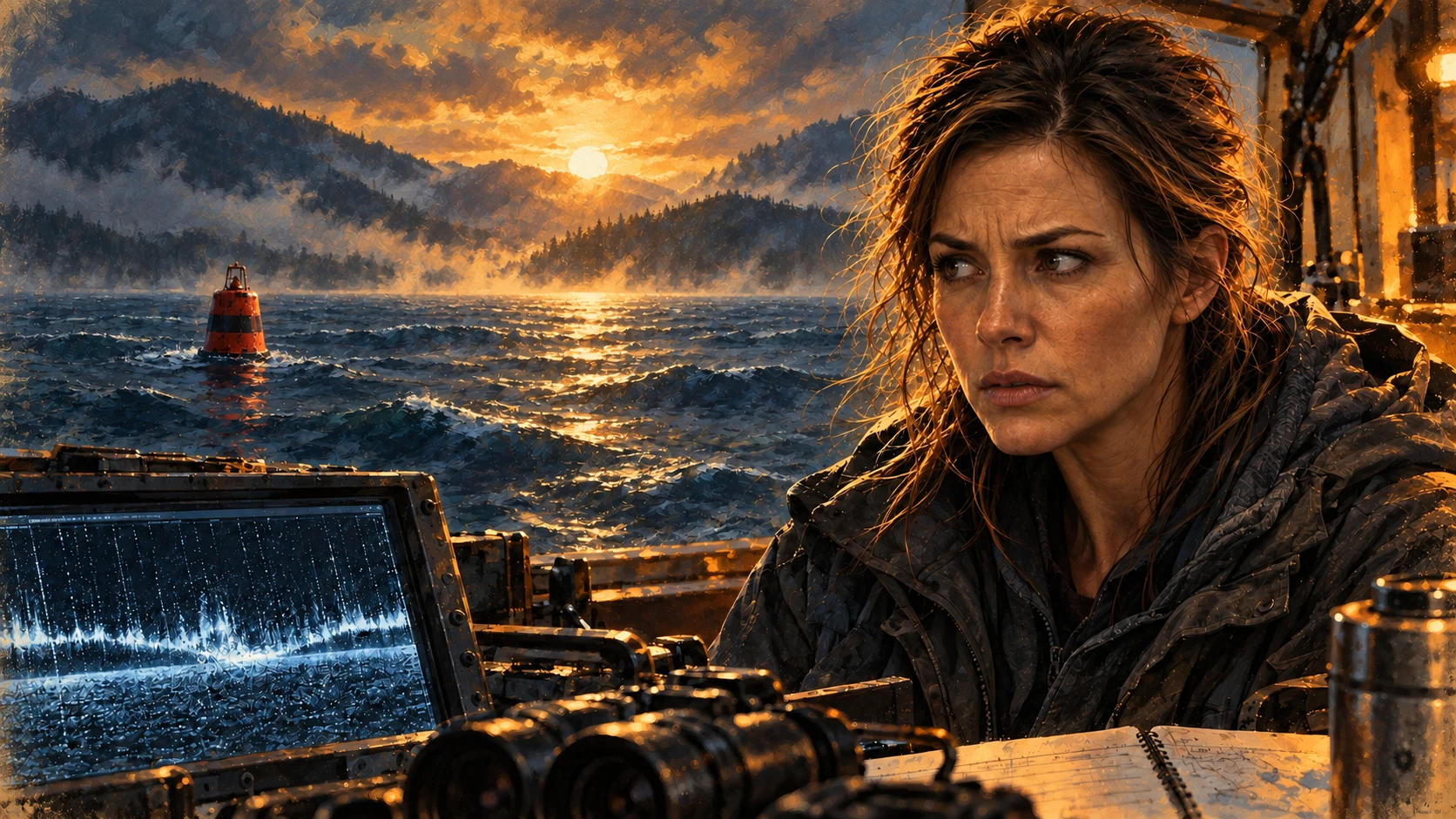
Cinematic story illustration · Elin Voss, the survey equipment, and the red calibration buoy belong to the fiction.
A fictional investigation inspired by Lake Iliamna’s ecology, reported sightings, and folklore. Elin and her team, the synchronized survey, and its measurements are invented. No expedition matching this narrative is documented by the sources below.
Behind the story / Case file 04
Lake Iliamna. A question of scale.
What is known about the water. What people report seeing. What the story imagines.
The Record · The lake
An extraordinary place, before the legend.
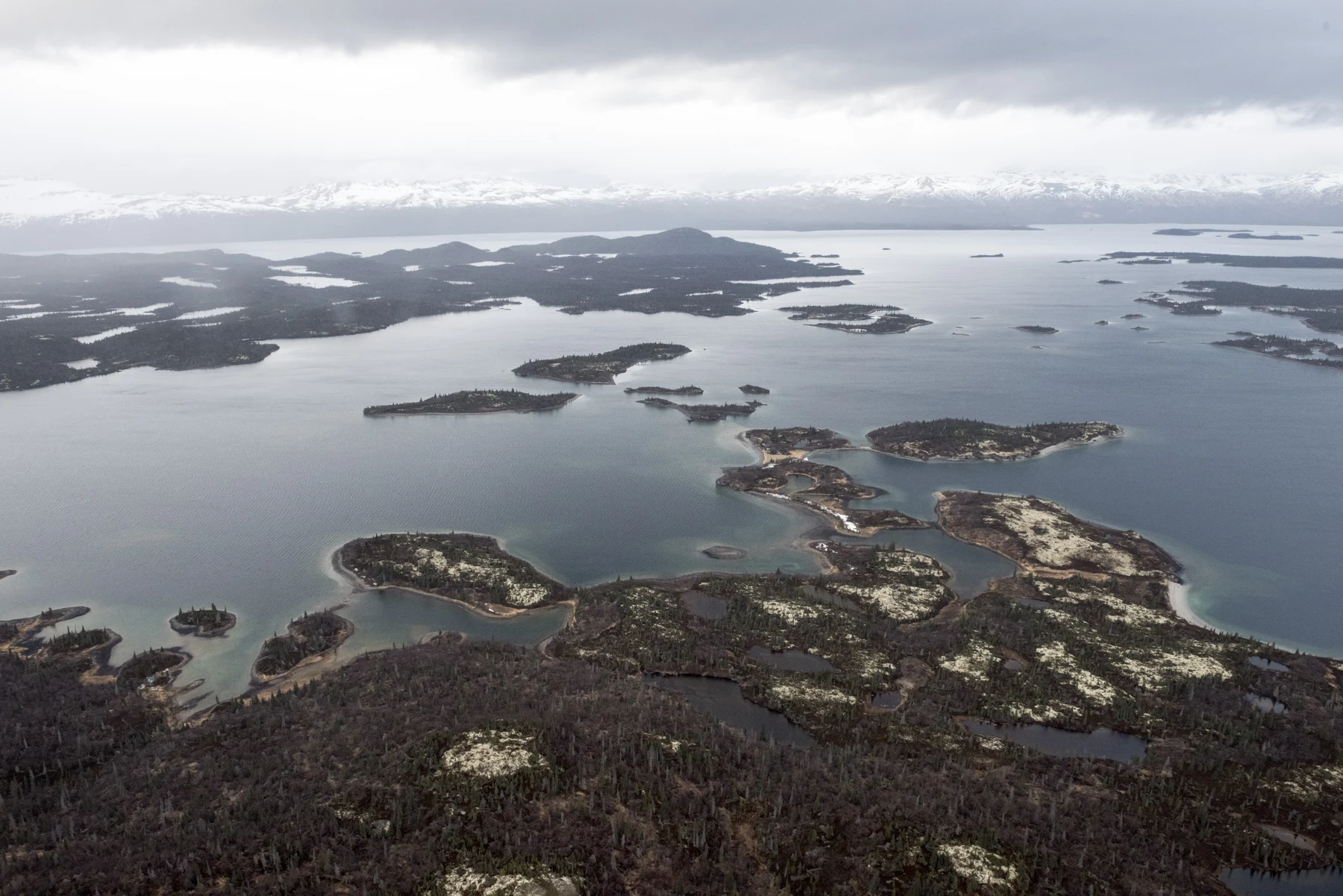
Nila Vena, Iliamna Lake · May 9, 2018 · Dev Dharm Khalsa / NPS. Source. Public domain in the United States. Resized and converted to WebP. A location photograph, not evidence of an unexplained animal.
Iliamna is Alaska’s largest lake, roughly 77 miles long and up to 22 miles wide, with depths approaching 1,000 feet. The Kvichak River connects it to Bristol Bay. Salmon are central to its ecosystem and to the communities around it.
This landscape supplies the story’s setting. Its scale and rich ecology do not, by themselves, establish the presence of an unknown giant predator.
Iliamna supports a year-round breeding population of harbor seals in freshwater. A 2024 genetic study found substantial differentiation from sampled marine harbor-seal populations, supporting a history of isolation.
These seals are documented wildlife. Their unusual population history is not evidence for the lake’s alleged monster. Nor does it validate witness estimates of unusually large animals.
Donald Orth’s 1967 USGS Dictionary of Alaska Place Names preserves an earlier attribution connecting Iliamna’s name with a mythical great blackfish said to threaten skin boats. It documents an account of a tradition, not an identified animal.
The name’s origin is disputed. Scholarship on local place names also records an explanation from Iliamna Lake Elders involving the Dena’ina name Nila Vena. Neither explanation should be expanded into a single, universal Indigenous belief.
The frequently retold 1942 Alsworth–Hammersley aerial encounter describes several large fishlike animals. Much of its detail survives through later interviews and secondary retellings, rather than a contemporary 1942 record. The 1945 aerial account and the unnamed 1963 biologist report also require caution about their source histories.
Alaska Magazine reports a June 2017 event at Kokhanok involving Gary Nielsen and other residents. The extraordinary length attributed to one animal was a witness estimate, not an instrument measurement. Multiple accounts of a disturbance do not establish its biological cause.
The warning about red boats and red clothing appears in published reporting as local lore. The supplied research does not establish that an unknown predator is attracted to red.
Later reporting also recalls the Anchorage Daily News’ $100,000 reward for evidence. Secondary sources differ on whether it began in 1979 or 1980; the exact year is left unresolved here.
Reported underwater-camera work by Bruce Wright and Mark Stigar photographed known wildlife, including seals. An account of damaged equipment describes an event the camera did not capture. Damage alone cannot identify what caused it.
Known seals, fish schools, debris, wakes, lighting, and errors of scale offer possible explanations to consider. Proposals involving giant pike, white sturgeon, or Pacific sleeper sharks remain hypotheses; the supplied research does not establish a giant population of any of them in Iliamna.
The material reviewed provides no verified specimen or biological evidence establishing an unknown giant animal. An incomplete explanation for an encounter does not prove that such an animal exists.
The Obscura · The imagined investigation
When the instruments become witnesses.
The story introduces Elin Voss and her fictional colleagues to explore a different question: what happens when a careful measurement still cannot support a confident explanation?
The 1942 prologue featuring Denny Ostrander and Walt Aason is invented. It must not be confused with the reported Alsworth–Hammersley encounter. The modern survey, red calibration buoy, acoustic results, and encounters likewise belong to the narrative.
The fiction · Spoiler boundary
After you’ve listened.
Reveal story discussion · Contains spoilers
The 14.2-meter result is an effective acoustic length within the fiction, not a documented measurement of an animal. Agreement among stations can inherit shared assumptions, and Elin’s investigation repeatedly tests that possibility.
The seven tracks come from the recovered station’s recording. Their count does not establish seven unknown giant animals; their individual lengths remain unstable. Noah’s later conservative estimate of 11.9 meters narrows the numerical result without identifying its cause.
The leaked memo shows how qualifiers disappear as evidence becomes a headline. Elin’s final position preserves the unresolved target while withholding a biological identification. The last missing-float image supplies unease, not proof. All of these findings and events are fictional.